
Dental Implants in Knoxville, TN
Do you struggle with missing teeth, loose dentures, or feeling self-conscious when smiling? At Dental Co. of Knoxville, Dr. Dyron Holt provides permanent dental implants in Knoxville designed to restore your full chewing function and natural appearance. Dental implants look, feel, and function just like natural teeth, offering a lasting solution to tooth loss.
If you are ready to replace missing teeth and regain your confidence, call Dental Co. of Knoxville to schedule your consultation with Dr. Holt today.
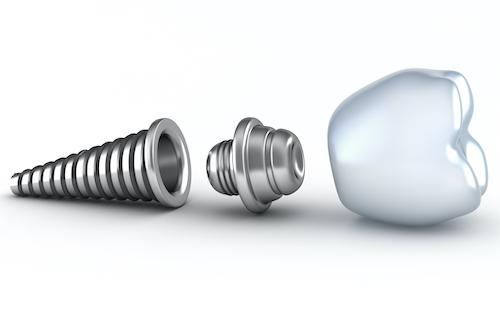 How Do Dental Implants Work?
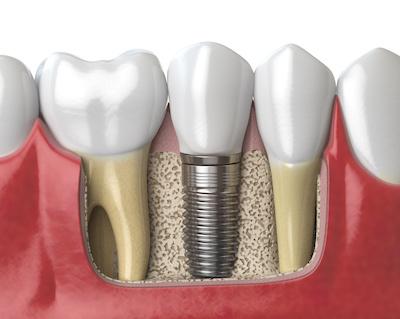
A dental implant functions as a permanent replacement tooth root that integrates directly into your jawbone using three key components:
- Titanium post: A durable post surgically placed into the jawbone to serve as a strong artificial root.
- Abutment: A small anchor attached to the top of the post to hold your replacement tooth securely.
- Custom crown: A realistic artificial tooth crafted to match the exact shade and shape of your surrounding teeth.
What Is the Dental Implant Process?
Dental implant treatment at Dental Co. of Knoxville is a simple, predictable process completed in clear steps. Here is what you can expect during your visits:
- Consultation and digital imaging: Dr. Holt evaluates your teeth, gums, and bone structure using clear digital imaging to design your customized treatment plan.
- Implant placement: Dr. Holt gently places the titanium post into your jawbone under local anesthesia to keep you completely comfortable and pain-free.
- Healing and bonding: Over 3 to 6 months, your jawbone naturally fuses around the titanium post, creating a sturdy foundation for your new tooth.
- Attaching the connector piece: Once healed, your dentist attaches a small connecting piece that holds your new custom tooth securely in place.
- Placing your custom crown: Dr. Holt places a custom-crafted replacement tooth designed to match the exact shade, size, and shape of your natural smile.
 Dental implants offer distinct practical and aesthetic advantages over